
[:en]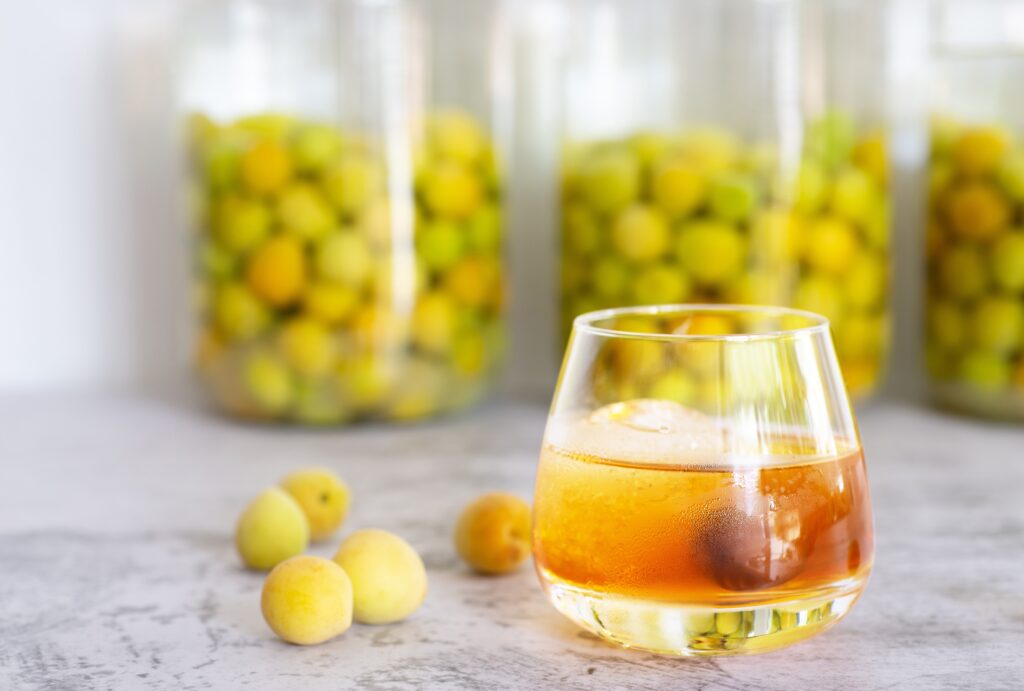
In the vast range of sake nuances, there is also a liqueur produced with Japanese plums and whose interest has grown in Italy since 2015. It is called umeshu and we have explored the subject in depth with one of the greatest Italian experts on the subject, the founder of Sake Company and Italian manager of the Sake Sommelier Association Lorenzo Ferraboschi.
What is umeshu and what does the term mean?
Umeshu is a Japanese liqueur obtained by macerating ume - a Japanese variety of green plum that is used when still unripe - in an alcoholic base, with the possible addition of sugar. It is the classic liqueur that Japanese grandmothers make at home, the equivalent of our nocino. Unlike sake, it does not have a set of rules and that is why there is no precise recipe. It can be made with sake, a fermented rice drink with a low alcohol content, or with shōchū, a distillate of barley, sweet potatoes or rice. You can also decide to age it, although this is still a singular choice. Each area of Japan has its own traditions. To answer the second question, however, the term 'umeshu' is a compound word: 'ume' are the native Japanese plums while 'shu', instead, means alcohol.
How is umeshu made?
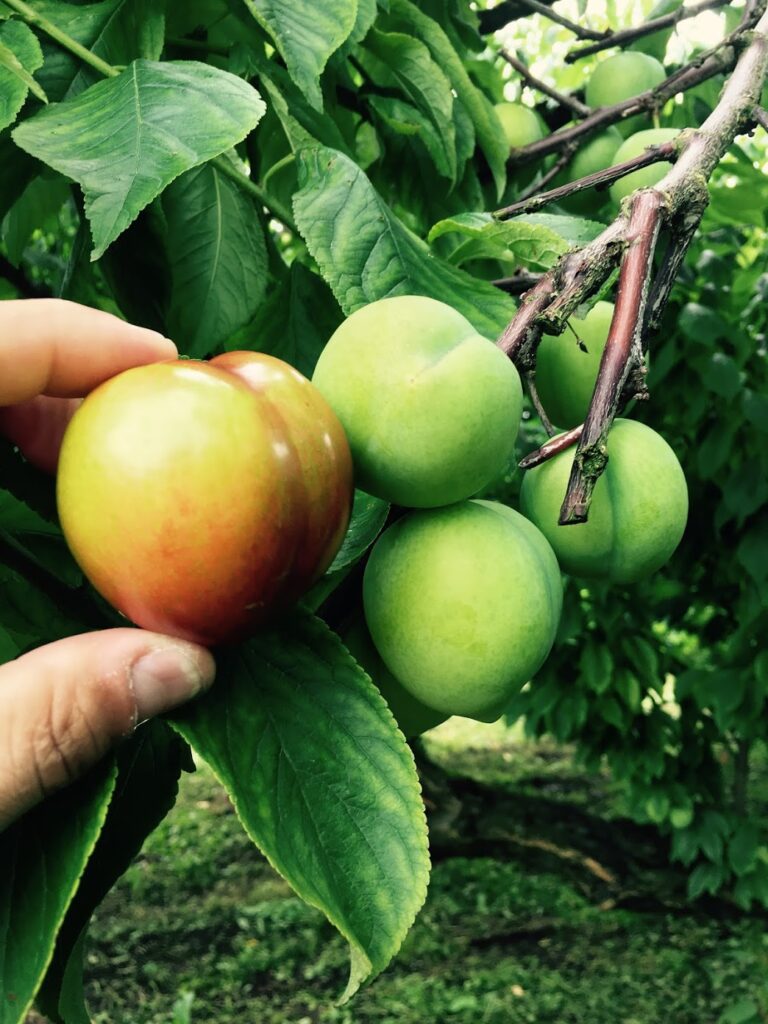
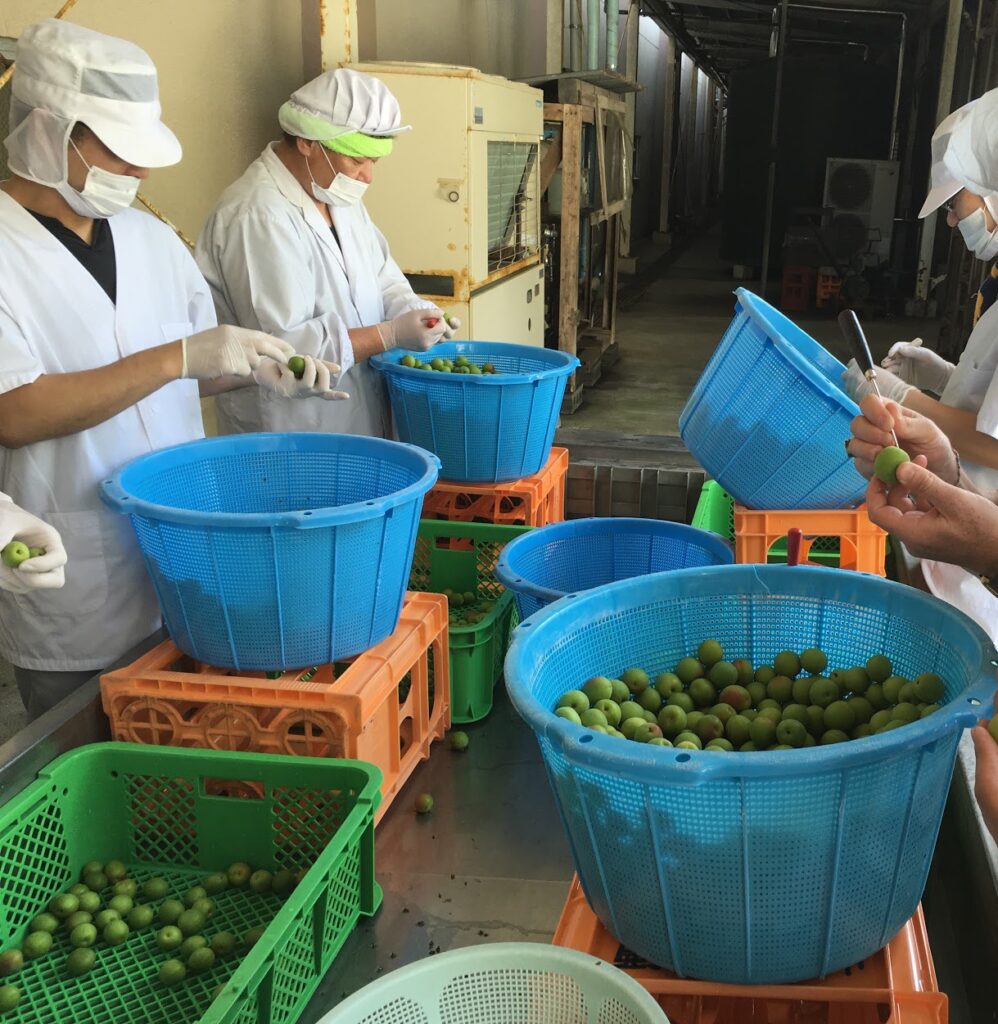
To produce umeshu, you start by picking the plums while they are still very unripe, which are therefore hard and poisonous. The stalk is then removed from each one and then you move on to maceration in the alcoholic base which is usually represented by the base sake of sakagura (the sake production company), an undiluted fermented product (18% vol. instead of 15) and with a good body, the genshu, which can bring out the flavor of the plums. The sake and the plums – the quantity of which is inversely proportional to the final alcohol content – are placed in a tank, the moromi, in which the maceration takes place, very often with the addition of alcohol, usually shochu, to raise the alcohol content of the umeshu. After two or three weeks at a constant temperature – in some cases room temperature, in other cases colder, up to 0°C – the final result is obtained, which can range from 8 to 16 % vol. The production process takes place every year in the period of April, May, June – the perfect period for harvesting unripe plums – and does not involve the use of sugar, although in some cases cane sugar is used to give an amber color, because plums are already natural sweeteners in themselves.
What are the parameters to recognize its quality?
In addition to the ingredients, as in any recipe, the price. A traditional umeshu not only has an immense work of slicing the plums, but it will also have no aromas and all the flavor and taste will come from the plums. If all this is done by hand, then it is right that the price is higher than that of an industrial product.
Are there different types of umeshu? If so, which ones? Which umeshu would you recommend to a beginner?
Yes, mainly two. Depending on the amount of alcohol and plums used, you can obtain a sweeter and darker umeshu, the vast majority of consumption, or a lighter and more acidic product. To a novice I would recommend the Kikusami. the taste is that of the traditional country house liqueur. It has an alcohol content of 11.5% vol., it is very balanced in taste between the acidity and the natural sweetness of the plums and has a slightly almondy aroma.
How is it usually consumed in Japan? At what time of the meal/day?
In Japan, each family produces its own umeshu and at the end of the year, it is rare to have consumed all of its production. This means that part of it is drunk at room temperature, fresh or with ice in the summer and the rest in the winter, at room temperature or hot. In the latter way, a caramel note is obtained, which makes it even more pleasant. In Japan, it is usually drunk at the end of a meal, alone or with a dessert.
What dessert can it be paired with?
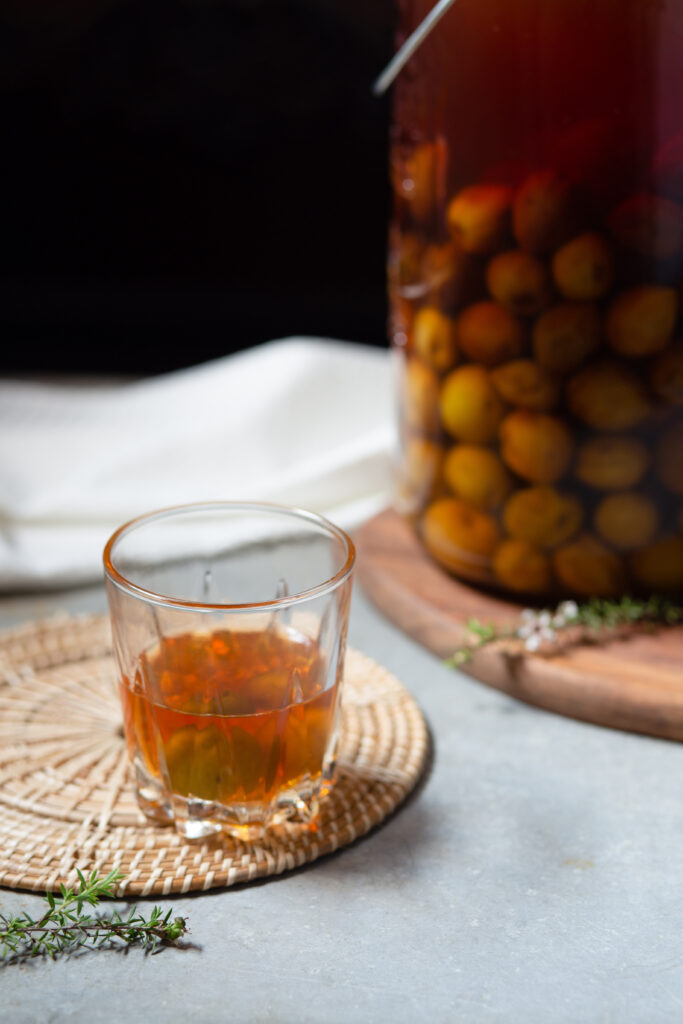
It can be paired with Japanese Ichigo Daifuku, sweets made with glutinous rice flour, mochi, filled with sweet bean paste and strawberry, or with Italian desserts. In this case, in summer the perfect pairing is ice cream, while in winter it is cakes or pies. If we are talking about the niche type of umeshu - the lighter one - it pairs well with acidulous fruit, lemon ice cream, or it is also suitable as a meal accompaniment. If instead we mean an aged umeshu, such as This, having notes of panettone and marzipan, a non-cloying sweetness and a very complex flavour, it is also excellent on its own, or together with cheesecake in the summer and tiramisu, chocolate or desserts that require it in the winter.
How can it be used in mixing? (question to Domenico Carella of Carico Milano)
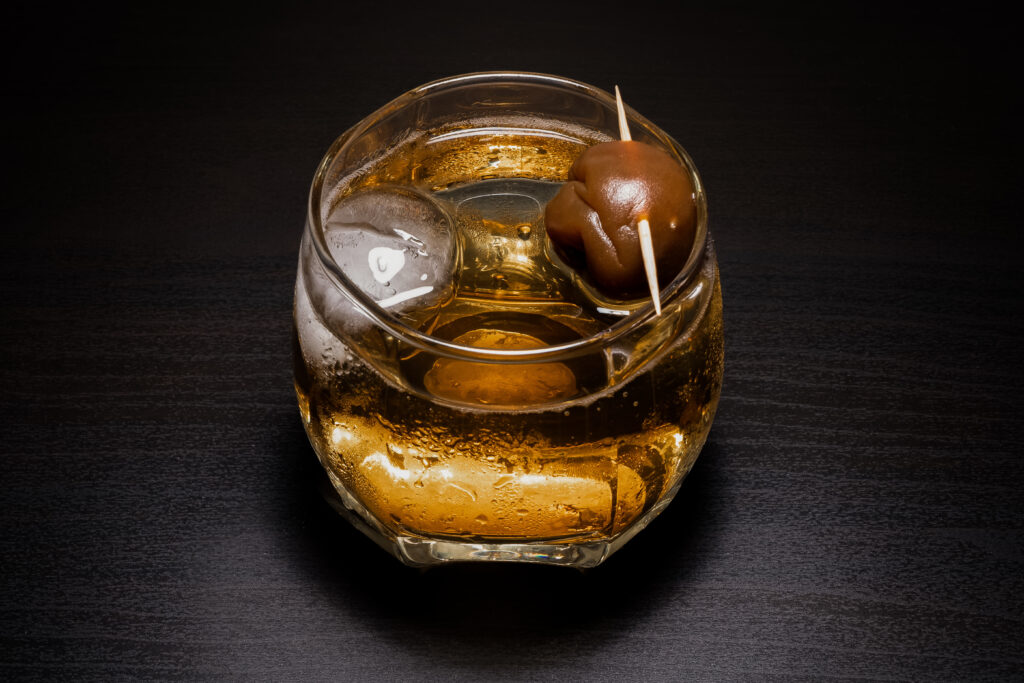
Since umeshu is an 'aromatic sake', it could be used as an alternative to vermouth. The types with a marked acidity could replace the white, in a Martini cocktail or in a Cardinale, while the sweeter ones could replace the red. Umeshu is also excellent in a highball, with soda, tonic or ginger beer. Another way to use the clear one is a twist on the Manhattan with a slightly aged grappa, or even better a brandy, and orange bitters, in equal parts. The accompaniment would be a wakamomo, a Japanese fruit that looks like an olive but is actually a small unripe peach, of which you can also eat the stone.
 [:]