


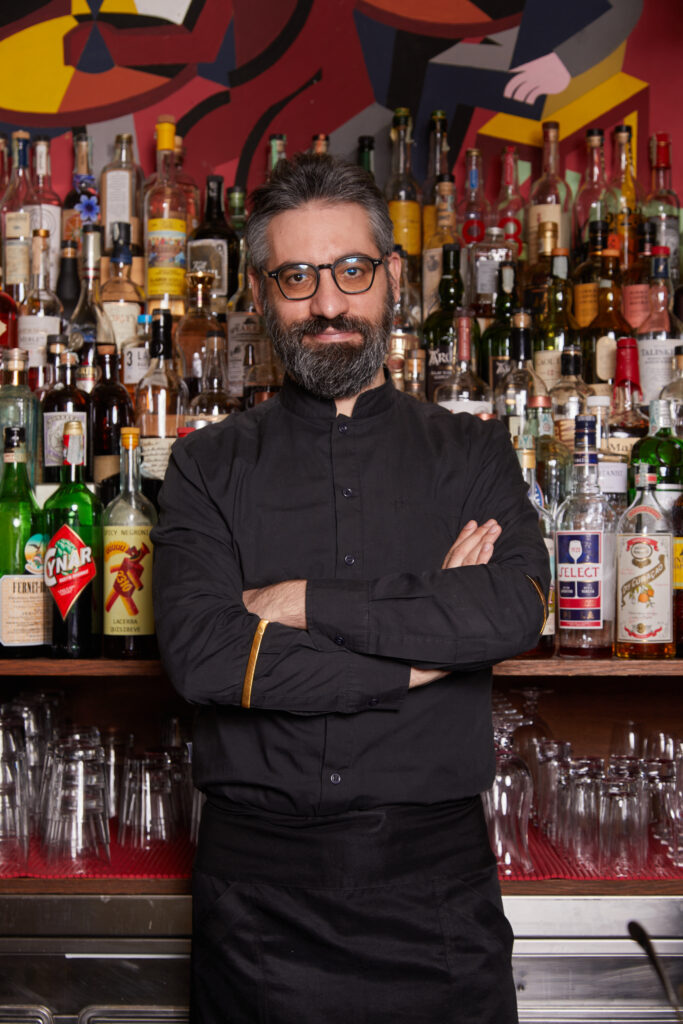
Starting from scratch, he taught himself everything, when you still looked for work in clubs through a round of text messages. Today he is the face of the Milanese cocktail bar in the Porta Romana area LACERBA QUISIBEVE, where this year he celebrates the tenth anniversary of his first entry.
Hi Agostino, when did you take your first step into the world of work? And into mixing?
When I was young, I attended the University of International Relations in Milan, at Cattolica. I worked in a communications agency during the day and in the evenings in many different places as a glass washer and in the dining room. When after 6-7 months I noticed that I was earning more in bars three days a week than in the agency, I left to dedicate myself entirely to this sector. It was 2002-03. As time went by, working in cocktail bars and discos in the evening, I became passionate about mixology and so I decided to take a course to become a bartender at 3F, thanks to the support of the cocktail bar where I worked at the time, where I had learned the first notions of mixology. I then decided to take a course at AIBES, to improve myself further, in particular on the classics. In the meantime, I finished university and went to work in Switzerland, in Munich and in other places abroad. I have always offered myself in places – daytime bars, night clubs, casinos, restaurants, hotels, Italian restaurants abroad – where I ended up refining the basics of hospitality.
What were your most significant experiences before LACERBA?
All the experiences have left me with something and all my employers who thought more about making money than anything else have always taught me that "it doesn't matter what they ask of you, but that the customer is happy" and so my approach, even today, has always been this. After numerous experiences abroad I returned to Milan, where I worked at Armani Privè Nobu, an elitist environment where I didn't have much opportunity to experiment, given the right importance given to management costs. In those years, it was 2009, I met the guys who would open Jerry Thomas, Antonio Parlapiano, Roberto Artusio, Leonardo Leuci and finally Alessandro Procoli. They had started holding courses in Milan, through Food and Foodies and hosting international bartenders such as Stanislav Vadrna, Alex Kratena of Artesian, Marian Beke, Erik Lorintz or Beachbum Berry. Before then, at least for me, it was difficult to find books and material for professionals in the sector and they helped me a lot, even to interest me in a mix of research, different from what I had done up to that point.
How and when did you arrive at LACERBA?
I was a customer at LACERBA and a friend of mine, the first winner of the Campari Competition Chiara Beretta, told me that they were looking for a bartender because Federica Negri was leaving to follow her first project on the Naviglio Grande here in Milan. The QUISIBEVE at LACERBA was one of the few bars, along with Rita, Nottingham Forest and Julep, frequented by many bartenders. Umberto Consiglio worked there and, when I joined at the end of 2011, I found myself side by side with Leonardo Todisco, who left in 2016 to move to Rita, where he is currently the bar manager. From that moment on I became the bar manager. Over the years I have been helped by many people, in particular by Giacomo Ellena who now works with the Bulgari group in London at Nolita and Davide Castelli, who arrived at our place very young and will soon start as the manager of a bar in the Isola area.
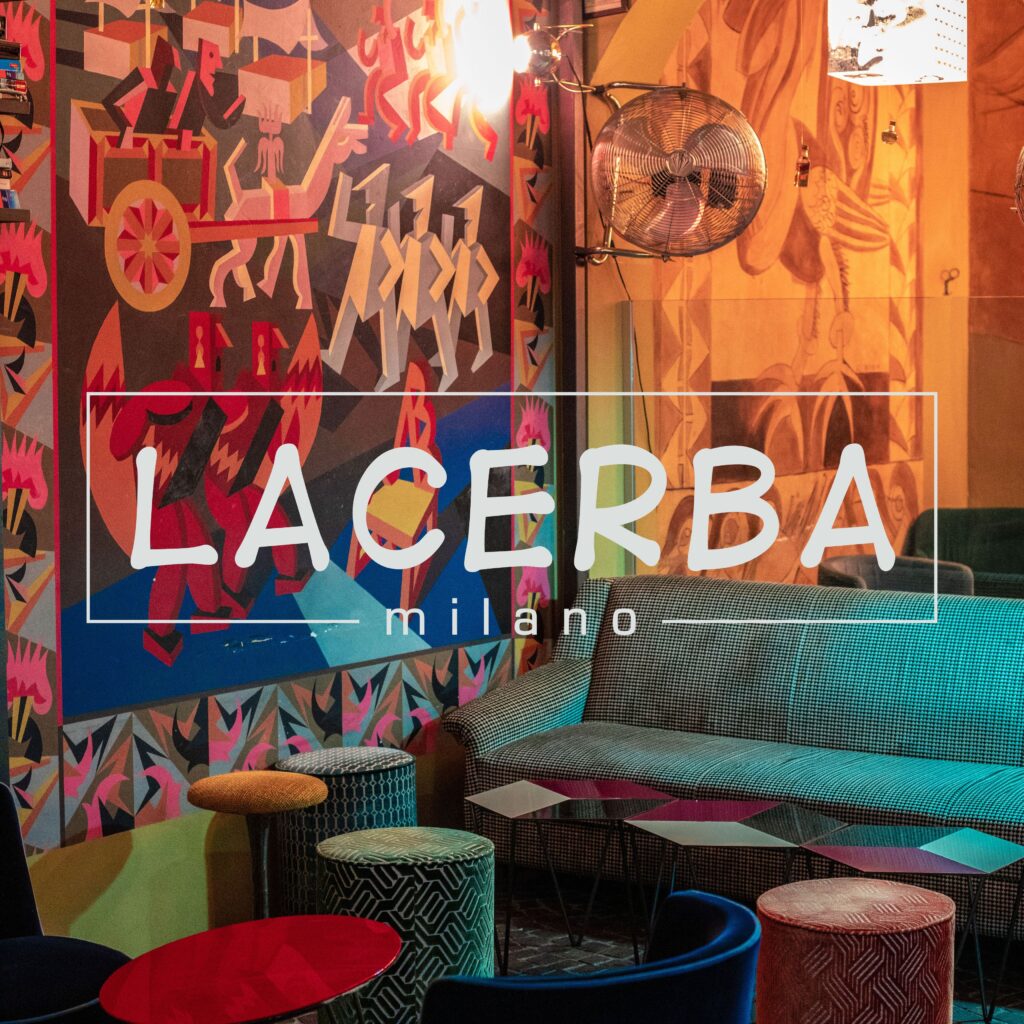
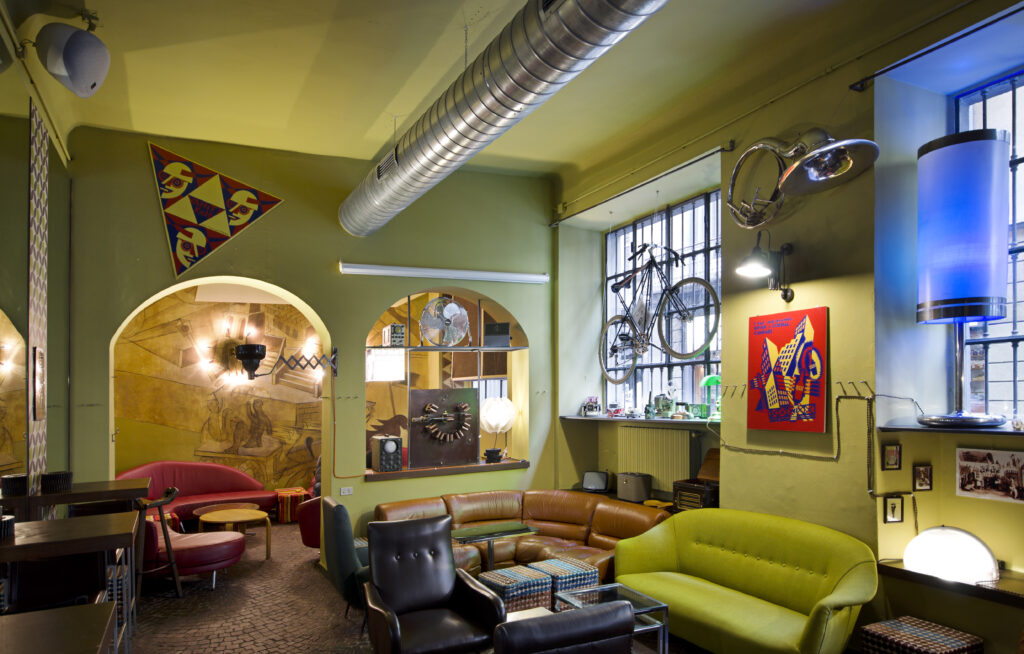
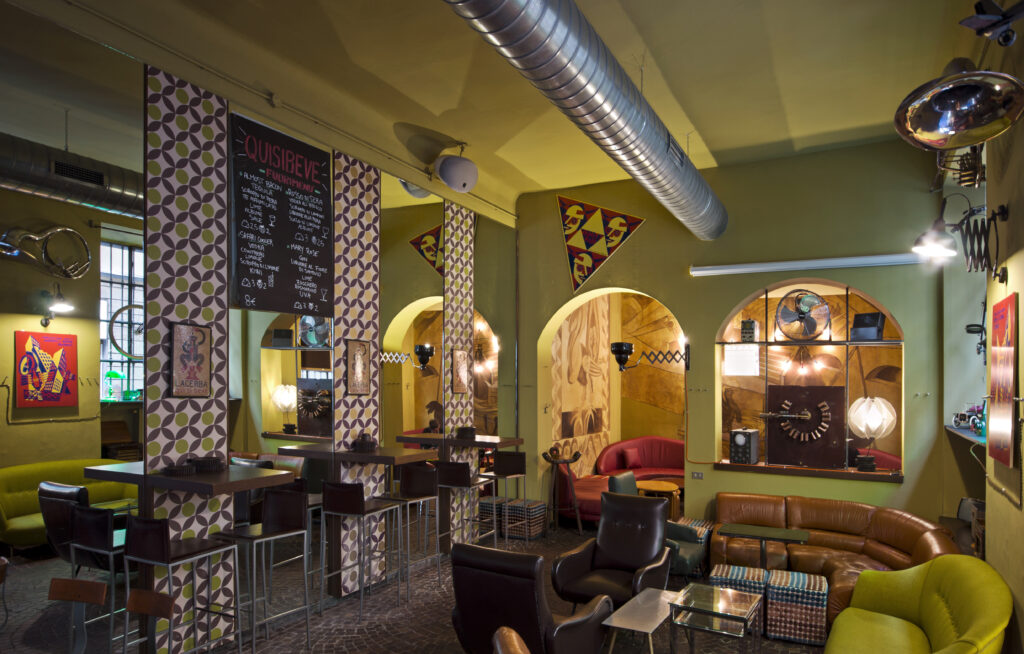
What was LACERBA before and when did it open? How has it evolved over the years?
Originally there was a vegan technotheque here, L'Acerba, run by elderly German gentlemen, who offered among other things a raw vegan brunch. The place didn't catch on because the Milanese public wasn't ready yet and so they decided to sell it. When the sister of one of the current partners (an architect) saw the place together with the potential buyer, they decided to take it. In the bibliography of her degree thesis there was a Florentine magazine dating back to the futurist era called LACERBA and so they decided to give it this name, focusing on futurist cuisine. It was '99 and the place - a futurist restaurant and pizzeria - had a certain resonance in the United States, where it was the protagonist in an interview in the Washington Post and in a conference on the subject in New York. In Italy the futurist proposal did not take hold and the place then became a seafood restaurant, with the conversion of the pizzeria space into the current cocktail bar in 2004 called QUISIBEVE together with Oscar Quagliarini, initially open three days a week with, among other things, improvisational theater shows. In 2009 there was a major renovation and a further one at the end of 2018, with the redoing of the bar counter and the soundproofing of the place. At the beginning of last year we inaugurated the new counter that I inaugurated - before that there was the one modified over the years with a thousand tricks of the pizzeria - which we used, due to Covid-19, for only a month and a half. The bar has always changed its target/approach during the week, the days at the beginning of the week were quieter and more relaxed, to arrive at a chaotic and very busy weekend, the music changed based on the dynamics, from blues and jazz, when the moment became cheerful and carefree ska/punk/reggae, up to very pushed electronic and heavy metal. We have always been very dynamic.
What does LACERBA represent for you and what do you represent for LACERBA?
For me, LACERBA has become an integral part of who I am and it's a bit like my home. During the lockdown, I suffered more for not being able to go to the place than for anything else. A historic relationship has also been created with many customers: some think that I am the owner, since they have seen me at the place for 10 years. For LACERBA, I am a point of reference, both for customers and for members.
How has Covid-19 impacted and how will the venue evolve?
We have activated home delivery and takeaway of food and cocktails and we are evaluating, in view of the recovery, to adapt the restaurant's offer to that of the bar, in order to standardize the proposal. We have always had good numbers - 130 seats for lunch and 70/80 for dinner at the restaurant and 1000 drinks on Friday evening alone - and we have never thought of changing. It goes without saying that the numbers from before, especially for health reasons, will no longer be possible, we have completely reorganized the bar room. Before we had a lot of seats - we calculated 3 shifts of about 75 seats per shift at the bar alone - today we have put in a lot of sofas and armchairs and we do not go beyond 32 seats, including the counter, the beating heart of QUISIBEVE. With the more time available, we thought of focusing on a simpler Italian cuisine, which goes to resume the dishes of regional traditions. With take-out and home delivery we started serving recipes like michetta with mondeghili or eggplant parmigiana, which we serve in a puttanesca variant.
Who is LACERBA's clientele?
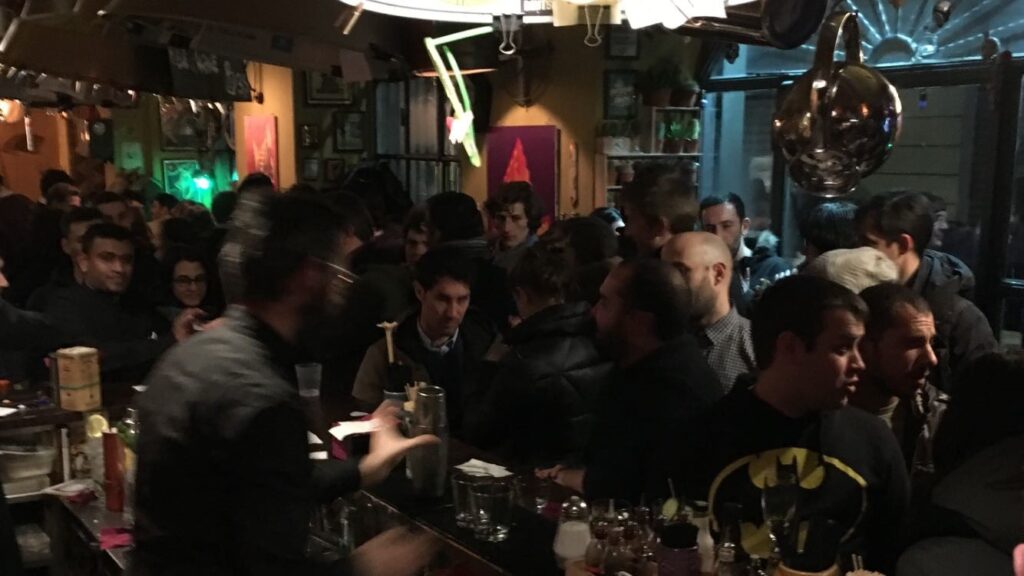
When LACERBA opened there weren’t many cocktail bars and so the few people who wanted to go and were in the area came to us. Over time, our clientele has grown in a heterogeneous way: students, couples of young people, adults and women undergoing treatment at the Mangiagalli clinic, who came to us for our non-alcoholic proposal that has now been around for more than a decade – since 2017 we have also been using Memento, a company for which I collaborated in creating the recipes – and for the changing table. We are a meeting point – people come to be together here – and this was seen when many customers came to visit us in this strange moment, even just to say hello or to bring a word of encouragement.
What do you think about the awards given in the field and the guests?
We have had many appointments over the years, but we have never chosen to ride this wave because we do not want to make our customers uncomfortable and because we do not really understand the meaning of these things. I do not want the people who come to me to come for the Martini, but to chat. My job is to create marginality and affiliation, but at my bar many friendships have been born. By choice we have never hosted external bartenders, to avoid embarrassing our customers, who remain our only priority. Only once, to understand how it could be, in 2018 we hosted 2 winners of an important Canadian award who made drinks with us for an evening, our drinks.
How is the drinks list structured today?
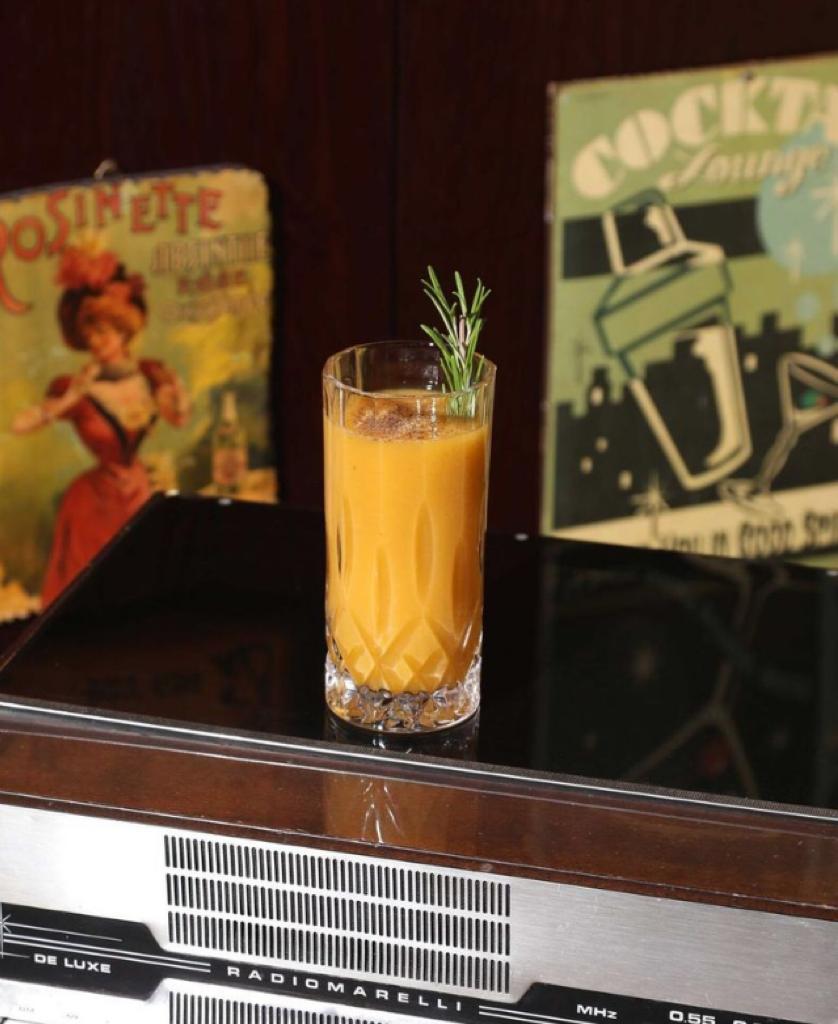
At LACERBA QUISIBEVE we always had a drink list in which we proposed 5 drinks of the month. The best-selling one entered the menu, in which we had 55 cocktails. Every year we made 50 new ones and we organized them by spirit. Some examples are the Panettone Sour with Milanese panettone rum, Pedro Ximenez, squeezed lemons and oranges, the Moncalieri with Franciacorta grappa, Select, sweet vermouth, absinthe, fernet and the Bitter Sweet Simphony with Jamaican rum, Demerara rum, Zucca rhubarb, creme de cassis, lime juice and raspberry syrup. We never had the classics on the menu but we always made them for those who asked for them, which are more than half of our production, a large portion of the clientele has always ordered Martini, Daiquiri, Margarita and Bloody Mary.
Why did you decide to focus on the Bloody Mary?
When I arrived at LACERBA, the research path on the Bloody Mary had already been started by Umberto Consiglio. Together with Leonardo Todisco we developed many versions, to which were added those that I created alone, when he went to Rita. Our peculiarity, since always, has been to prefer the tomato cream to the more traditional tomato juice, to obtain a denser and less full-bodied result. In recent years, infinite variations have been born, including the Smockey Mary with peaty whiskey instead of vodka, beechwood smoked salt and Tabasco, the McMary, which the kids really like, with wild spring onion vodka and the Malavoglia with oregano tequila and yellow tomato cream. My favorite is the Yellow SubMaria, with tequila infused with pepper and turmeric.
Are you doing takeout and home delivery of cocktails too?
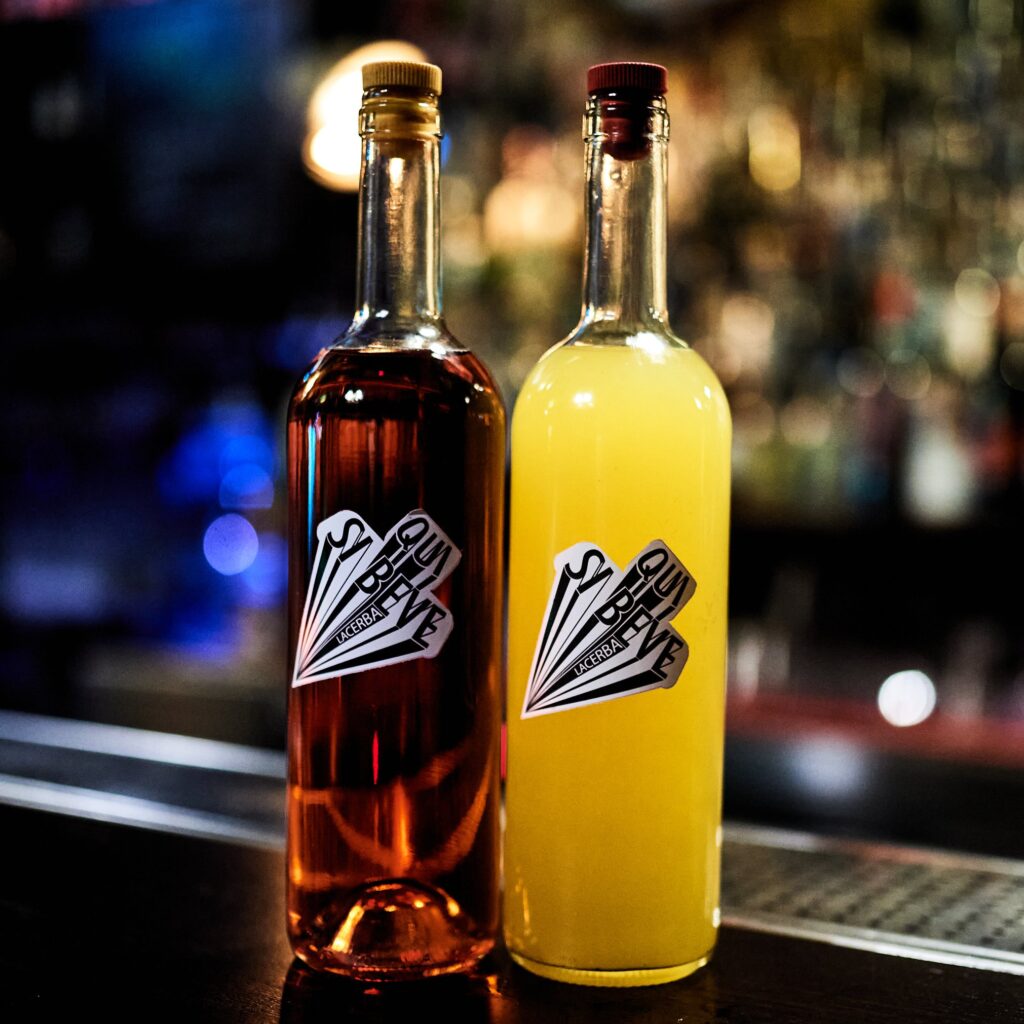
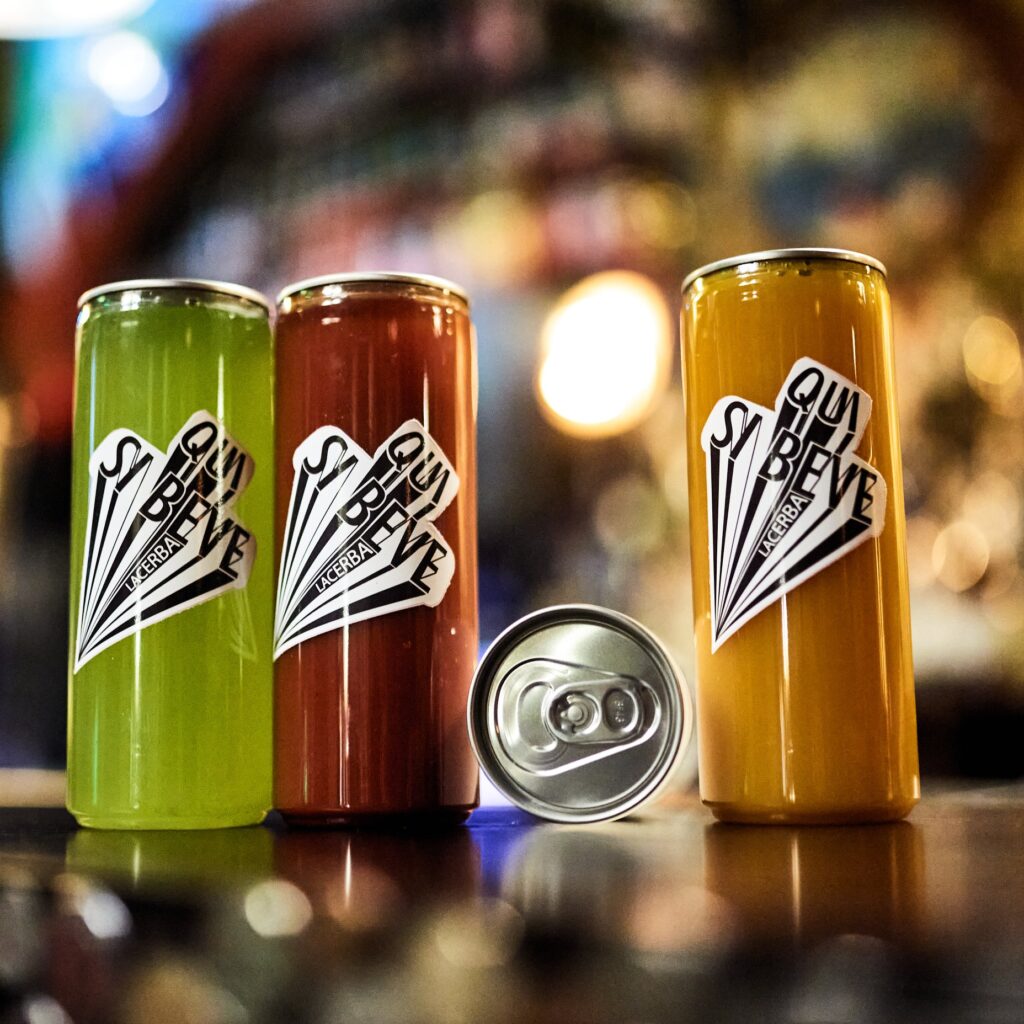
Yes, we are delivering about ten canned drinks including 5-6 classics. We also have a section with 4 liter drinks: Vodka sour with ginger, Hemingway Tea Cup, with gin, French Blue tea syrup, lemon, grapefruit, Brancamenta, McNamara, with peaty whiskey, blended scotch, lemon, ginger syrup and honey, and Bloody Mary L'Acerba, with tomato cream, green tabasco – slightly less acidic than the traditional – lime juice, salt, pepper, sugar and habanero-infused vodka, Basil'n'Honey with vodka, basil, honey syrup, lime and grapefruit.
What's your favorite cocktail?
The Gibson, a variation of the Martini Cocktail prepared with gin, dry vermouth and orange bitters, which I garnish with sweet and sour onions that I infuse with gin and peppercorns. I love it, along with the Bloody Mary, because I believe it is the drink par excellence of the aperitif and also for its versatility. Everyone prepares them/has them prepared according to their preferences.
 [:]





