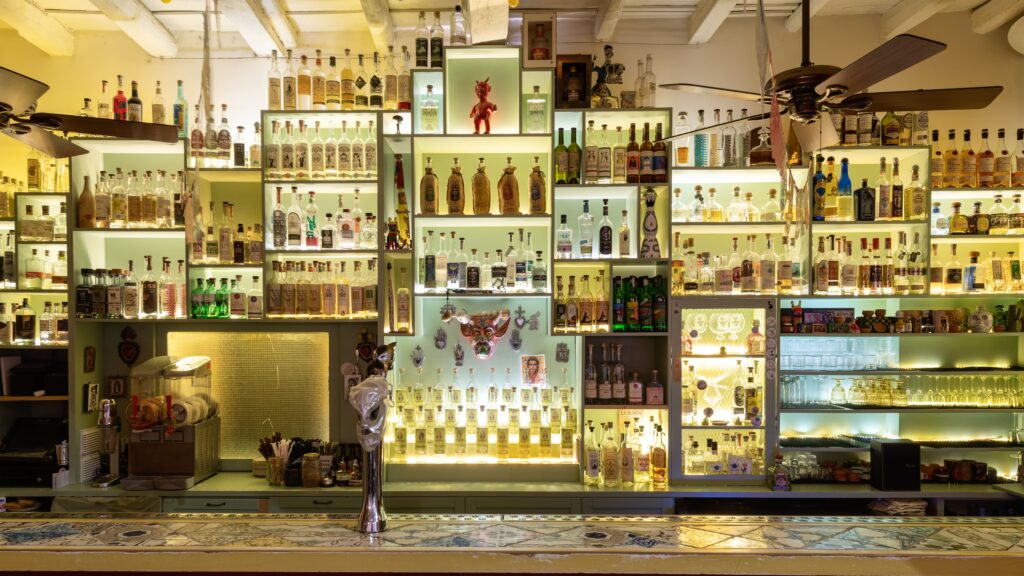
Today, in the United States, is the National Tequila Day, the day of the year dedicated to the celebration of Mexico's quintessential distillate. For the occasion, we interviewed four experts on the topic: the bar manager of La Punta Expendio de Agave Cristian Liar, who in his restaurant in Rome can boast around 300 labels of tequila, the brand ambassador of Patrón Tequila Giacomo Acerbis and the two latest winners of the Patrón Perfectionists Italia, a competition on the topic, organized by the global tequila company Patrón: Luca Fanari, bar manager of Veleno Cocktail Bar & Pasta in Rome, e Andrea Benvegna, bar manager of SURF in Imperia.
WHAT IS TEQUILA AND WHERE IT COMES FROM
Tequila is the distillate obtained from the cooking, fermentation and distillation of blue agave, also called azul or tequilana. To be defined as tequila, the distillate must be obtained from at least 51% Of blue agave (mixto). If the tequila is instead obtained exclusively from this variety of agave, then you are faced with a tequila 100% (premium).
“If it says only tequila on the bottle" says Cristian Bugiada “It's a tequila mixto and we don't know what the other distillate mixed with agave azul is, even if it is usually based on sugar cane or cereals. The tequila mixto it was used a lot when the distillate in Italy was still in its infancy and did not enjoy a good reputation. Then, from the end of the 90s, since 1998 approximately, in Italy 100% tequila began to be marketed, a product that is certainly of higher quality and traceability, which over time people have begun to appreciate. Now, Italy is the eighth largest consumer in the world."
Unlike other spirits such as whiskey and gin, “tequila must be produced and bottled in only one state, Mexico. There are five regions authorized by the regulations – Jalisco, Guanajuato, Tamaulipas, Nayarit and Michoacán – but, in fact, more than 90% of the production occurs in the Jalisco region, where the city of Tequila is located”.
“Precisely in these territories, theagave” – says Giacomo Acerbis – “whose peculiarity is that ages on the ground, a process necessary for producing tequila that lasts from 5 to 7 years. Afterwards, the plant can be harvested and, for the production of the distillate, only the central part of the plant is used (piña), rich in inulin, a carbohydrate which breaks down into sugars during cooking, which will then be fermented and distilled".

HOW MANY TYPES OF TEQUILA ARE THERE?
In addition to premium and mixto, tequila can be diversified based on whether the distillate is aged in barrels or in steel. The tequila white or plata, is unaged or aged for 60 days in steel, the youth or gold has a golden color, given by rapid aging or the addition of caramel, the rested ages in oak barrels for a few months, theyear for at least one year and theextra oldeven up to eight years.
These times then vary from company to company. “From Patrón” – continues Giacomo – “we mainly produce three types of tequila: the Silver, which does not age and is the maximum expression of what tequila is, the Repoused, a blend of tequilas aged in five different barrels, for a period ranging from 2 to 5 months, and theAñejo, the same product but with an even greater aromatic spectrum, due to the refinement which lasts from 12 to 15 months”.
ATTACHMENT TO TRADITION AND CONVIVIALITY
To the question "If I tell you tequila what do you think of?” the response was unanimous.
For Luca Fanari, “tequila has the strongest tradition in the field of spirits. L'toThe attachment that they have towards this distillate in Mexico can be considered equal to that which we have towards wine in Italy. Exactly for this reason, in the Patrón Perfectionists Italia final from two years ago I brought a cocktail, Simply green, which evoked a sense of conviviality. The drink was served from a 3D-printed bottle of Patrón made from corn paper placed in the center of the table, in the same way as tequila in Mexico. The cocktail, with Patrón Tequila, coriander, tarragon, celery salt, white wine vinegar and sugar, was a pre-batch, which I poured into the mixing glass, stirred and then poured into the glass”.

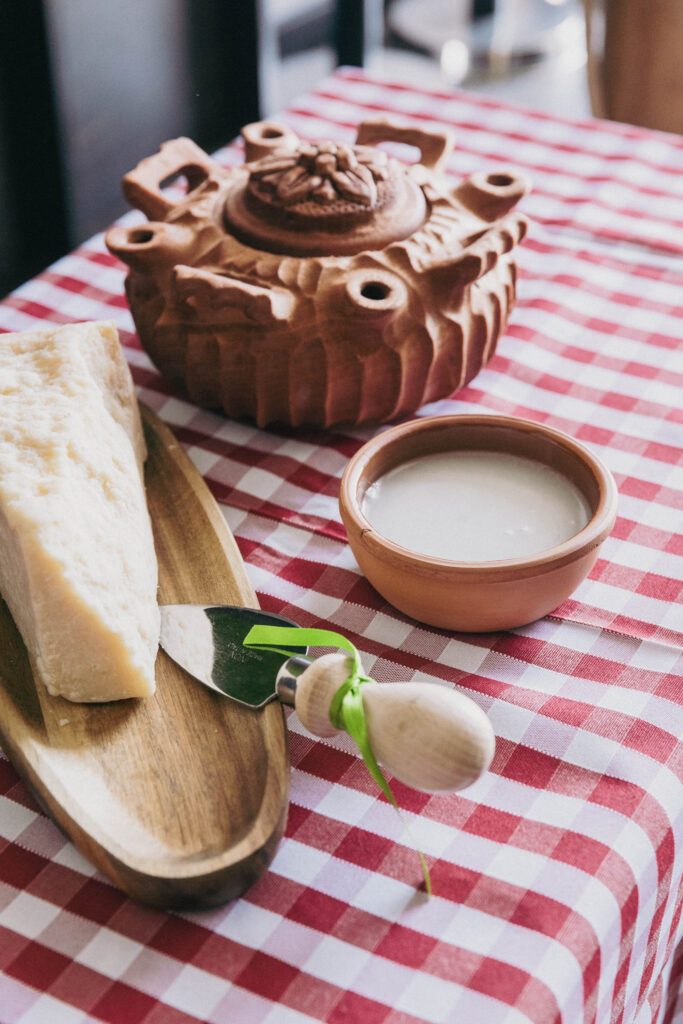
The same conviviality was told and then represented in the last world final in Mexico by Patrón Perfectionists Andrea Benvegna, in which he participated after winning the Italian final. “If I think of tequila, I think of being together. Tequila can be drunk alone, but it's a bit like wine: in company it's a completely different thing. In the final, I wanted to communicate the concept of conviviality with Compartir: a non-alcoholic cocktail with Parmigiano Reggiano whey, coconut water and Patrón cordial, a homemade syrup with hints of Patrón Silver, with herbaceous, citrus, agave and vanilla notes. The conviviality was all in the service: I poured the cocktail for the judges from the grolla, a particular wooden cup used for taking turns drinking in company. To accompany it, because conviviality is also Italian, I proposed a block of 18 month Parmigiano Reggiano".
TEQUILA AND MEZCAL: THE TWO IMPORTANT DIFFERENCES
Although the tequila be considered the son of mezcal, distillates have two important aspects that differentiate them.
Both are produced by the fermentation and distillation of agave. But, if in the case of the tequila, you must use at least the 51% blue agave, blue or tequilana, for the mezcal they can be used at least 40-50 different varieties of agave.
Second and important difference is the production process. If the mezcal it's still handcrafted, cooking the agave in a wood-fired oven or dug into the ground, In the tequila The production process has undergone an important evolution from the point of view industrial, which allowed him to take the there.

“Tequila is a distillate that” – Cristian explains – “unlike mezcal which represents authenticity, it is innovation, without losing in terms of quality. Before being called tequila, this product was called vino de mezcal de tequila and was probably similar to mezcal, in terms of flavor. Then, with the industrial revolution, everything has changed, including the taste. The reason was theintroduction of cooking in brick ovens with steam injection instead of the ancestral cooking of mezcal. In this way, the smoky note was lost taste has become softer and the production has suffered aimportant acceleration, given that the steam oven takes 1-2 days to cook unlike the 3-4 days of ancestral cooking. If tequila production is now equal to 800 million per year, in mezcal it is still stuck at 8, for a ratio of 100:1".
“The negative side of this aspect” – Cristian continues – “is that to keep up with the increased requests for tequila, also dictated by the promotion of the spirit by VIPs who have opened their own brand, the quality could drop. And that could be a real shame. But I, who have been traveling to Mexico since 2014 with my partner Roberto Artusio, know many companies that work well and are not willing to compromise."

HOW TO MIX THE VARIOUS TYPES OF TEQUILA
The first thing Giacomo points out to us is that in the three most well-known mixing classics in which tequila is used there are few ingredients. Three in the Margarita, where there is Triple sec and lime juice, three for the Tommy's Margarita, which has lemon juice and agave syrup, and four for the Paloma, where tequila is mixed with lime juice and grapefruit soda pink (the fourth would be salt, ed.).
What is the result of this consideration? “It's the quality of tequila that makes the difference. For this reason, in my work I have the obligation to promote the use of premium tequila in cocktails". As, among other things, the three IBA recipes also state. “The consumption of tequila is quite recent in Italy. In the 1990s, the first premium brands exploded in the United States, the United Kingdom and then, slowly, in the rest of Europe. Now, tequila is also entering the best-selling cocktails, while up until 5-6 years ago you only drank the Margarita in certain contexts" – like Mexican or Tex-Mex restaurants – “Paloma was non-existent.
Now with Patrón, we aim to replicate the same work that has been done in Italy with other spirits such as gin. Three steps are required: the inclusion of the premium product in the bottle rack, the customer's request for a cocktail with tequila and the request for a cocktail with a certain type of tequila”.

If the tequila blanco or plata it is very versatile in cocktails, as well as being present in the IBA Margarita and Paloma recipes, reposado tequila and añejo should be used with awareness in mixing.
“About the rested, at this year's edition of Patròn Perfectionists Italia" resumes Giacomo “The competing bartenders will have to do a twist on the Paloma using reposado tequila, together with a neutral soda and a grapefruit-based cordial. In this way, they will have the obligation to enhance this product", which can be even more legit in mixing. Now, one of the three IBA classics, Tommy's Margarita, is already expected to be present, but it is not excluded that this product can also be used in a different way: perhaps in a signature or twist on classic, including the Paloma.
"L'year” concludes Giacomo “It is instead perfect for preparing an Old Fashioned, in which tequila replaces whiskey, or a Mexican Negroni, in which tequila replaces gin. The advantage is to have a cocktail with more vegetal and fresh notes. And then, more and more bartenders have the desire to offer twists on classics and tequila fits perfectly into this trend."

CAN TEQUILA COMBINE WITH FOOD?
Food-tequila it's a combination that we've probably never heard of, but which could make inroads into public consumption in a few years.
He is already working towards this goal Luca Fanari behind the counter Poison Cocktail Bar & Pasta, restaurant on the underground floor of Luciano Cucina Italiana: restaurant in the Michelin Guide which bears the signature of chef Luciano Monosilio, famous in Rome and not only for his carbonara.
“Now, we have one drink list – Waste end – focused on the recovery of raw materials not used in the kitchen: out of eight cocktails on the menu, two are tequila-based and we pair them both with the dishes. One of the two is called Chilly Pepper. To make it, I use the chilli heads discarded in the amatriciana to flavor the tequila, which I mix with a carrot cordial, sugar, citric acid and Italicus rosolio with bergamot”. The matching dish? “It could only be thetomato and bacon, which has two ingredients in common with the cocktail: chilli pepper and carrot".
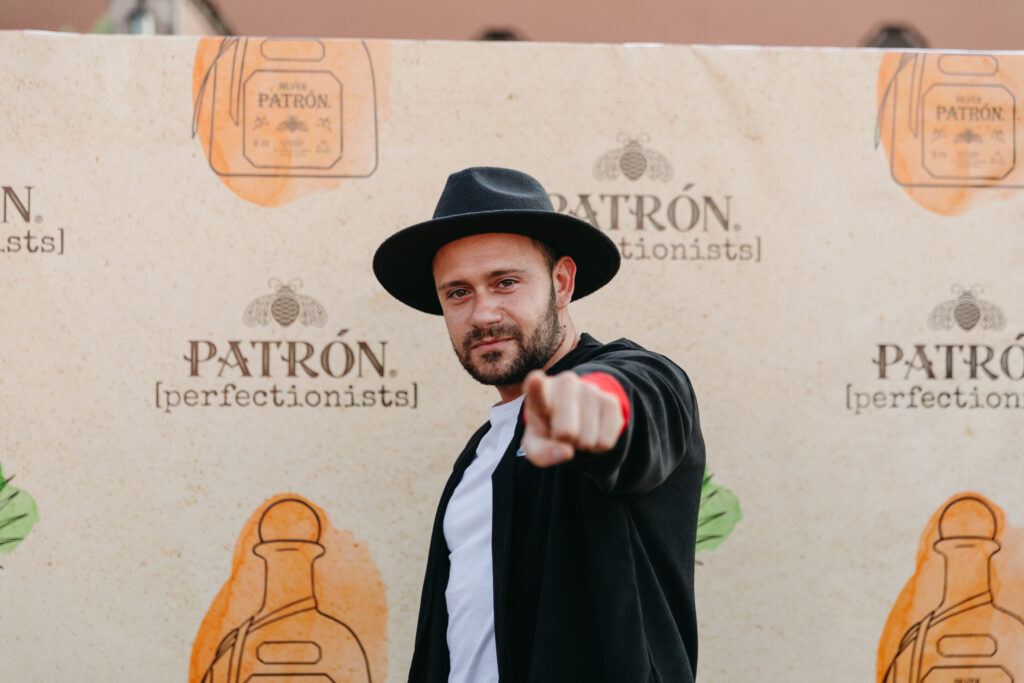
 Andrea Benvegna he is the bar manager of a cocktail bar with kitchen, SURF, in which the grilling of ingredients such as fruit and vegetables plays a central role, which are then used in cocktails, combined with dishes that also have grilled ingredients within them.
“Mine was born precisely in this wake Grilled Paloma, a twist on classic in which pink grapefruit juice, obtained from a fruit cooked on the grill, was mixed with tequila, salt air and toasted sesame”.
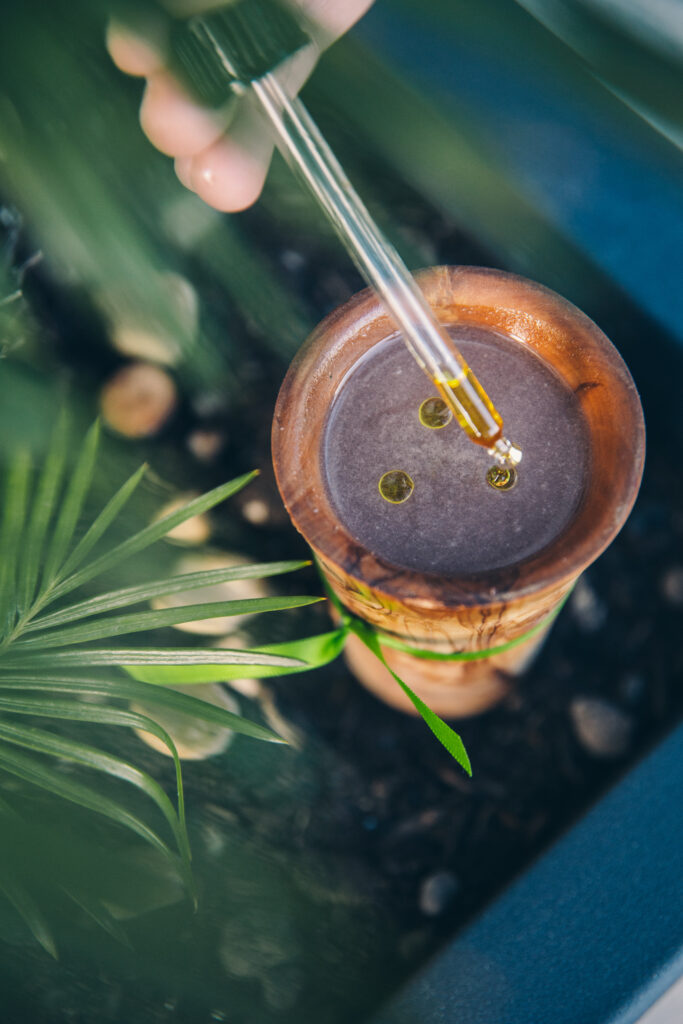
One of the distinctive points of his mixing, which allowed him to win the Italian Patrón Perfectionist final, was the combination of food and tequila in the glass. “With EVO, whose meaning stands for evolution, the objective was to pay homage to the Ligurian olive tree in all its facets. The cocktail, a twist on the Margarita, was prepared with Patrón silver tequila, sugar and lime, homemade Taggiasca olive juice, oloroso sherry, a type of Spanish fortified wine that is neither dry nor sweet, and olive oil. The glass? It was a cup made with olive wood”.
With the reposado, however, the same bartender created a drink inspired by the Mexican taco al pastor, a typical preparation with pork, coriander, chilli pepper and pineapple. The cocktail, Tacos al pastor, is made with Patròn Reposado, lime, corn water, which represents the tortilla, pineapple and tajin, a Mexican condiment made up of salt, lime and chili pepper.
“The cocktails” concludes Cristian “they are the means that we bartenders have to make customers passionate about a spirit. At my place a new customer can order a Margarita but then, when he sees all those bottles in front of him, he asks us if we can let him taste something special and, for us, there could be no greater satisfaction”.