
[:en]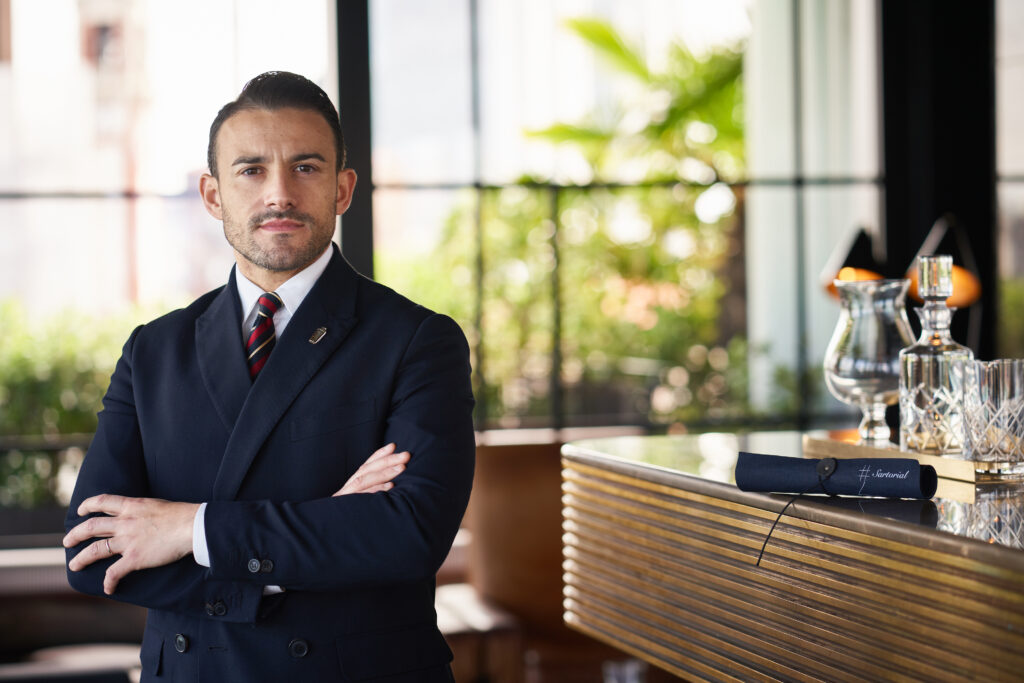
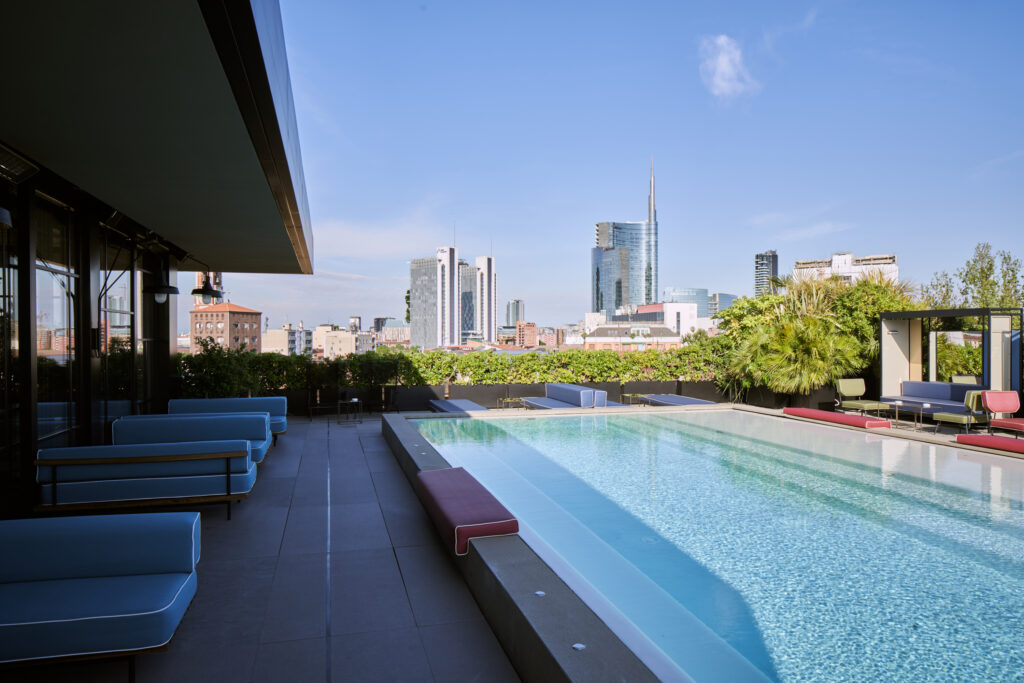
Bar manager of Ceresio7 since 2017, Guglielmo Miriello is a spokesperson for the art of Italian hospitality, which he manages to interpret well in his venue, interfacing with customers with very different needs, but always high profile. His cocktails complete a memorable experience in one of the best Milanese settings.
What are your origins and what did you study before becoming a bartender? What experiences have you had?
I am from Puglia, a region where I lived until I was 19. After hotel school, where I enrolled to become a chef, I discovered my passion for the bar and therefore for mixology, thanks to the experience with Marco Sumerano, owner of Glass in Legnano. After taking the first course in 3F, which produced people of the caliber of Agostino Perrone, Lorenzo Bianchi and Andrea Montagnana, in 2005 I put my research into practice in Columbus, a project by Stefano Lascatti with two restaurants and a catering service, managed with partners Antonio Vadalà, Giuseppe Tulumello and Salvatore Buoncore. I have always been a person who researched, studied, experimented; I traveled a lot to London, between masterclasses and international bar shows, to see the trends of the following year. I was one of the 10 finalists of the Innovative Drink of the Year contest in 2010, I won the Italian section of the World Class Competition Diageo in 2011 and participated in the final in New Delhi as a representative of Italy. After working for a few years in Milan, between the Bulgari Hotel and the opening of Excelsior in the Galleria, in 2012 I went to Shanghai to the starred restaurant Maison Pourcel as bar and bistro manager.
Back in Italy, did you immediately come to Ceresio7? Why did you decide to accept the invitation?
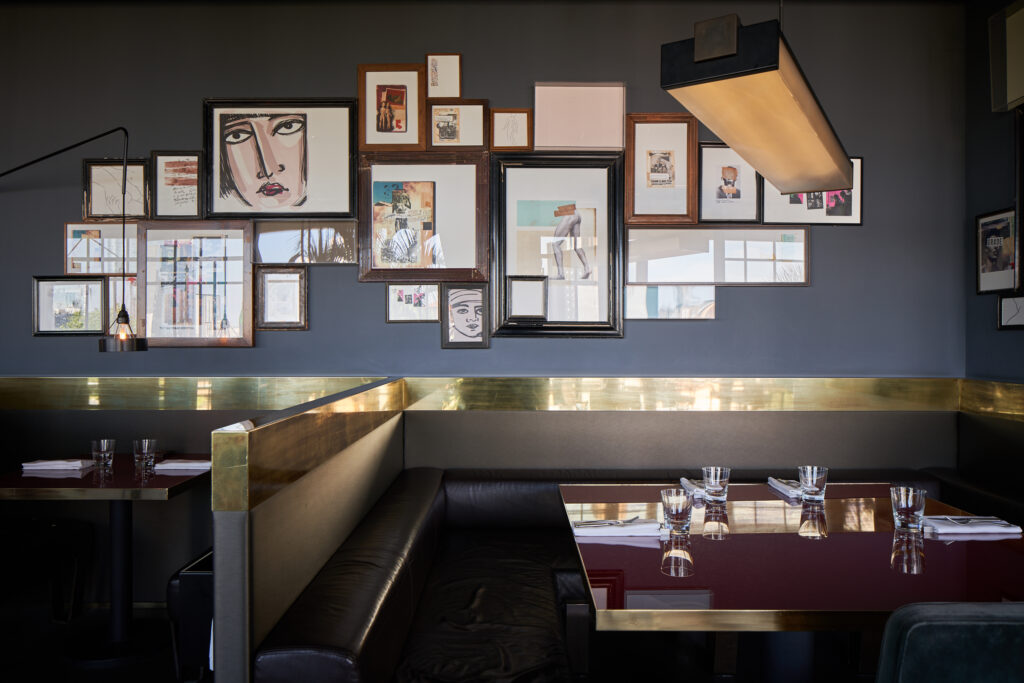
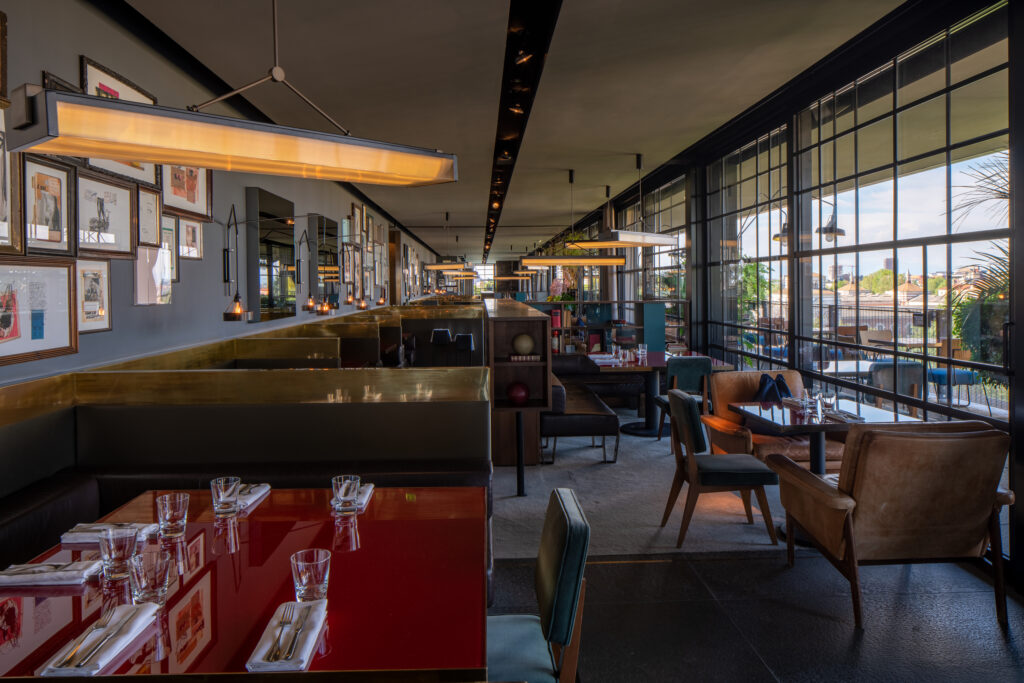
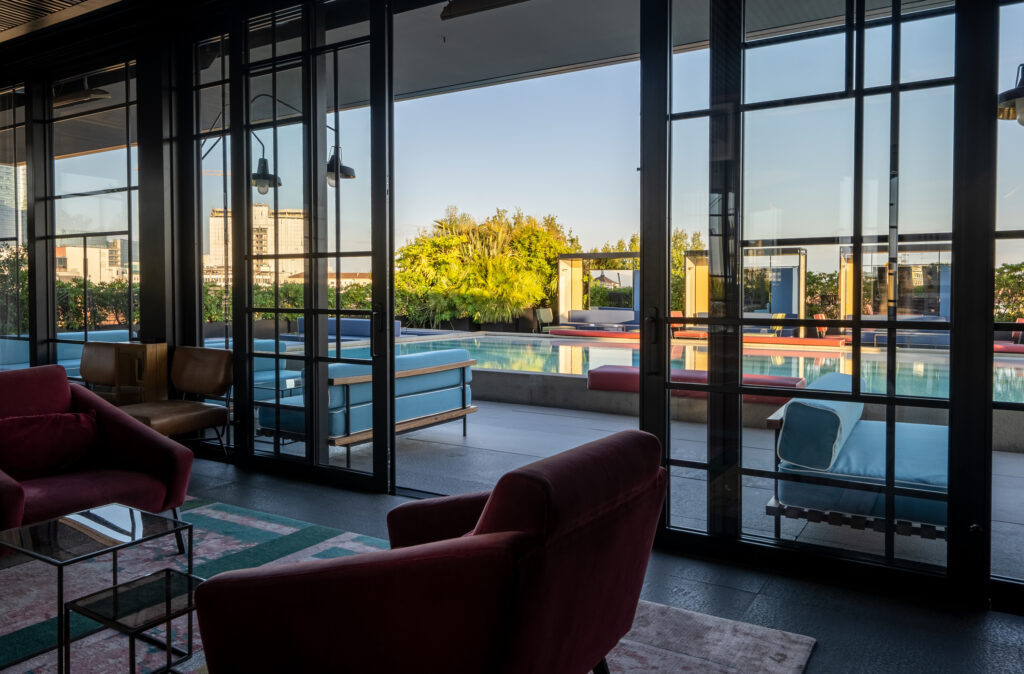
In 2013, when I returned to Milan, I worked as Operations Manager for the innovative opening of Dry Milano. We were the first to serve gourmet pizza paired with cocktails in a luxurious, international setting. After four years, during which I also worked on the operational side of the restaurant, I went to Ceresio7, where I was bar manager and supported the operational functions of the restaurant. In choosing to come to Ceresio7, the importance of the shop window was fundamental, in addition to the independence of the structure. Part of the ownership is responsible for managing it and, if on the one hand I have more freedom than in a hotel context, on the other hand there is also a closer relationship with the managers. Furthermore, the restaurant is of the highest level and the location is unmatched in the city.
How difficult do you think it is to be a bar manager in such an international place? What is your strong point?
Compared to other realities, here the expectations are very high. What I do is fulfill the need and the requirements of the guest in the moment. We offer an experience and the staff is part of it. We have to modulate ourselves in front of the customer, always maintaining a high level of service. I interpret hospitality as achieving the well-being of our guests and it is the goal I aspire to every day. Therefore, I believe this is precisely my greatest strength.
How would you define your mixing? How much communication is there with the kitchen?
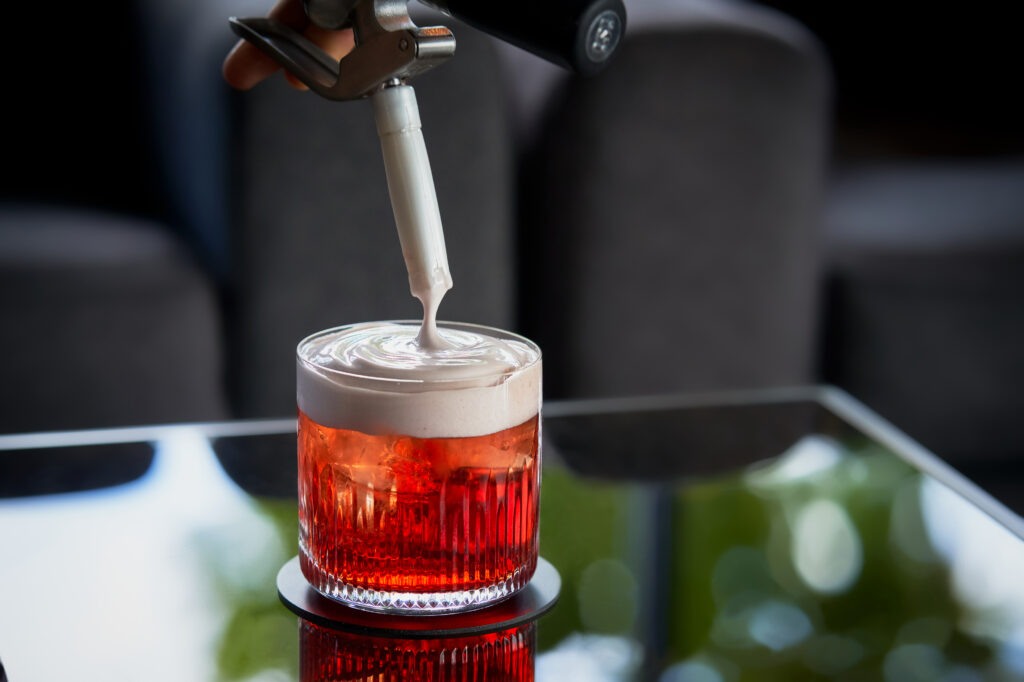
My cocktails are contemporary, they draw on tradition, on the origins and on the basics of mixology, but with a current interpretation. They are contextualized to the times in which we live, to current taste and have evolved thanks to my ambition to improve myself. I have always tried to keep an eye on trends, without leaving tradition aside, and on details, such as the type of glass or ice, which for me are not such. My cooking experience has contributed to making me a meticulous bartender who is attentive to the manipulation of ingredients. At Ceresio7 we use numerous cooking techniques such as in Hellfire, where we roast the red pepper, infuse it in mezcal and cook it at a low temperature to extract its aroma. The two worlds also communicate a lot in terms of accompaniments: in the restaurant's tasting menus we pair our cocktails with the amuse bouche, appetizers and desserts.
What was the theme of the last drink list?
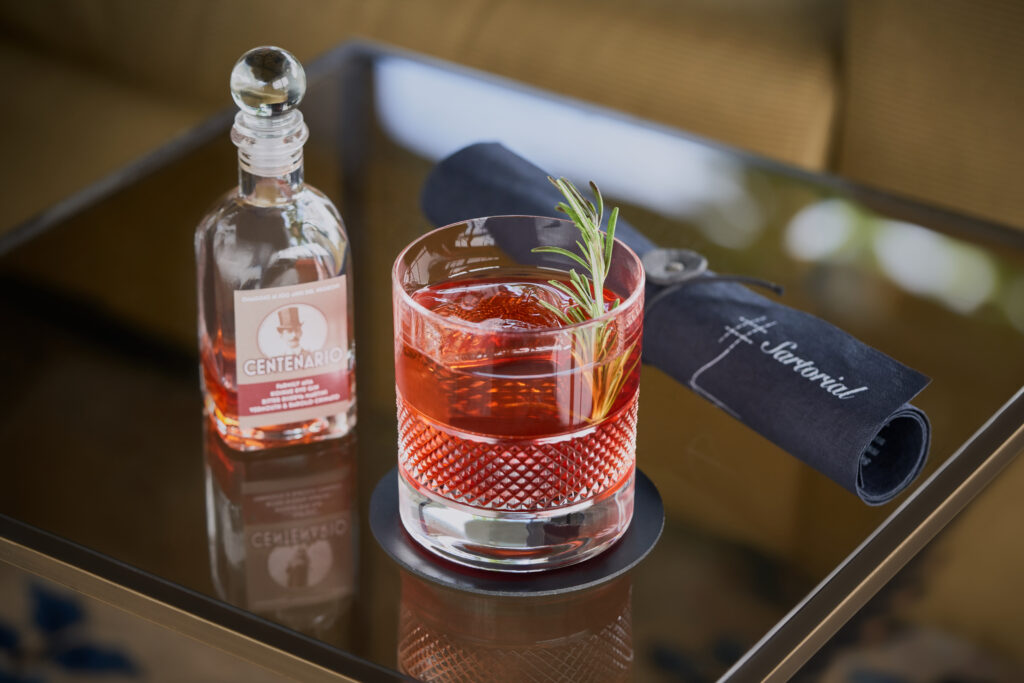
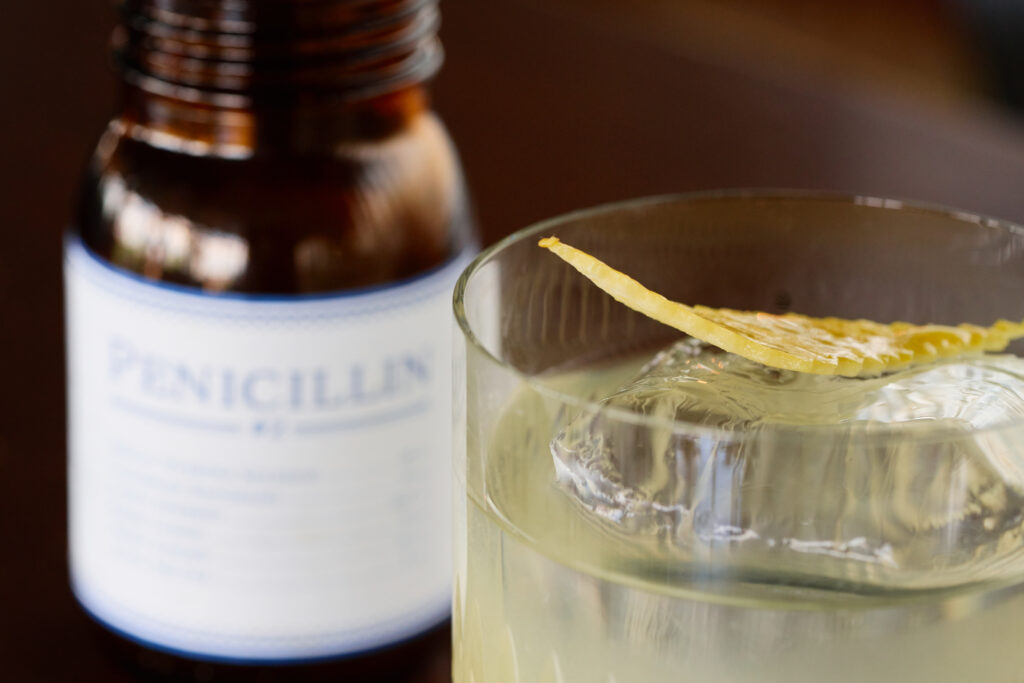
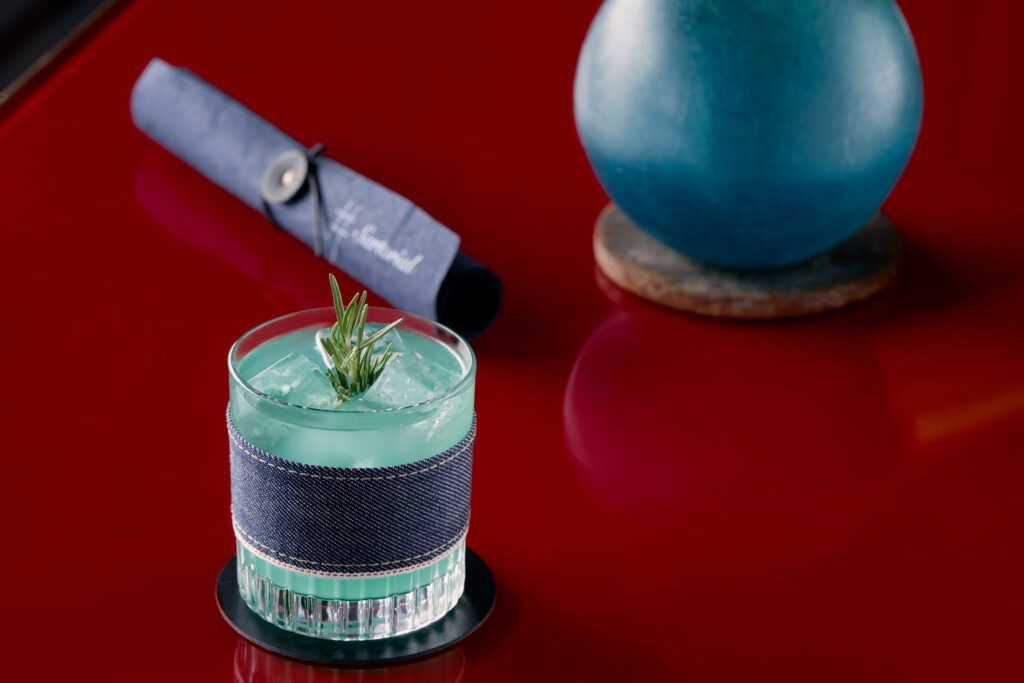
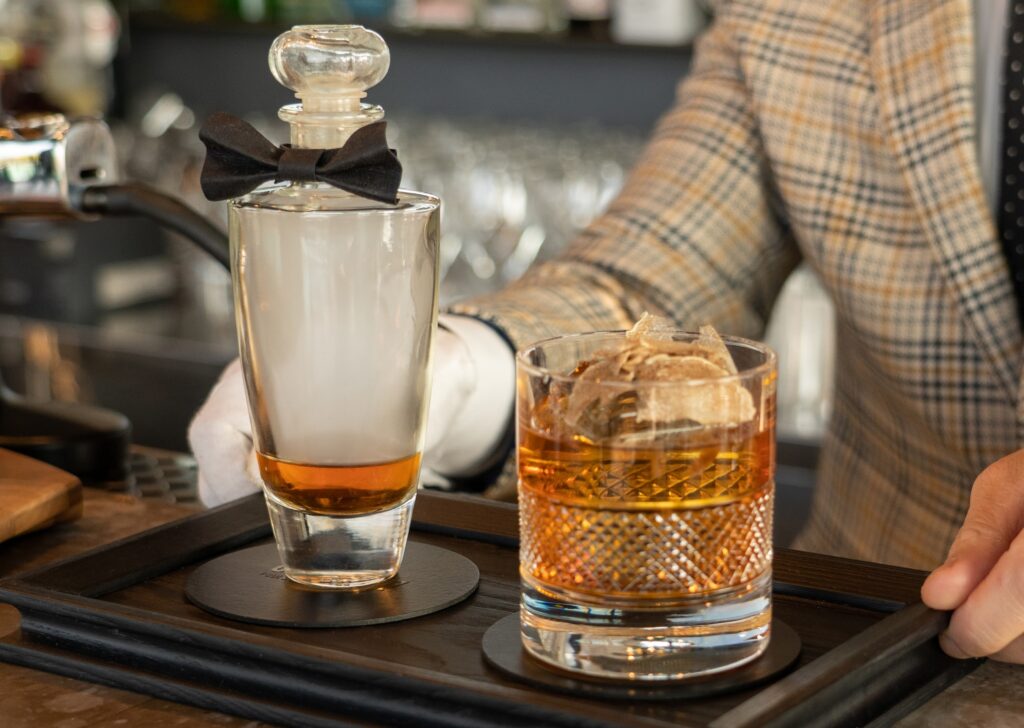
The last card is called Sartorial and was printed on a blue laser-screened organic fabric. The 18 cocktails are divided into two sections: Textiles and You inspire me. The first is dedicated to fabrics, reinterpreted using ingredients that recall their characteristics, as in the case of the Smoking, a reinterpretation of the Old Fashioned prepared with a Vieux Carrè syrup in place of sugar. It is a smoked cocktail, served on a wooden tray with a bow tie around the neck of the bottle and smoke recalling the smoking jacket. The You inspire me section is dedicated to the reinterpretation of classic cocktails. For example, we have a twist on Penicillin, a recipe created in America in the 2000s, in which we replaced the whiskey with tequila and mezcal. We serve it in a pharmacy bottle, because of the name.
What impact did Covid-19 have on Ceresio7 and how did you react?
If the virus has had a very strong negative impact on our sector, on the other hand it has given us the opportunity to reinvent ourselves. In our case, during the first lockdown we delivered a home cooking menu with wine accompaniment, a choice that we decided not to replicate because it was difficult to implement, but we also sold wine labels on our website and set up a membership club, in which we gave our customers benefits on the use of our services.
For the Alba White Truffle International Fair you prepared Italian Gentleman, a cocktail with Alba white truffle. How much space will it have in cocktails? What will be the next trends?
As in cooking, I also believe that truffle should be used in moderation in cocktails, because it has an interesting but also very covering aromatic note. If we have to talk about trends, however, I believe there will be a return of cognac, whisky - both neat and mixed - mezcal and tequila and that cocktails with increasingly complex flavours and a simpler, more elegant and essential appearance will prevail. Another trend will certainly be that of low-alcohol cocktails - at Ceresio7 we have been making them for a few years with a base, flavoured soda, wine (fortified or not) or vermouth - and those made with solid ingredients, for example fruit and vegetables, which will provide - through advanced techniques and processes - only the aroma, in the form of extracts, centrifuges, etc. In the future I believe that the already traced path of self-production will also be followed. Research bars will work on fermentations and other techniques already widely used for the creation of unique ingredients and the purchase of external raw materials will increasingly decrease. Cocktails are no longer made just behind the bar but starting in the laboratory.
What personal projects do you have underway?
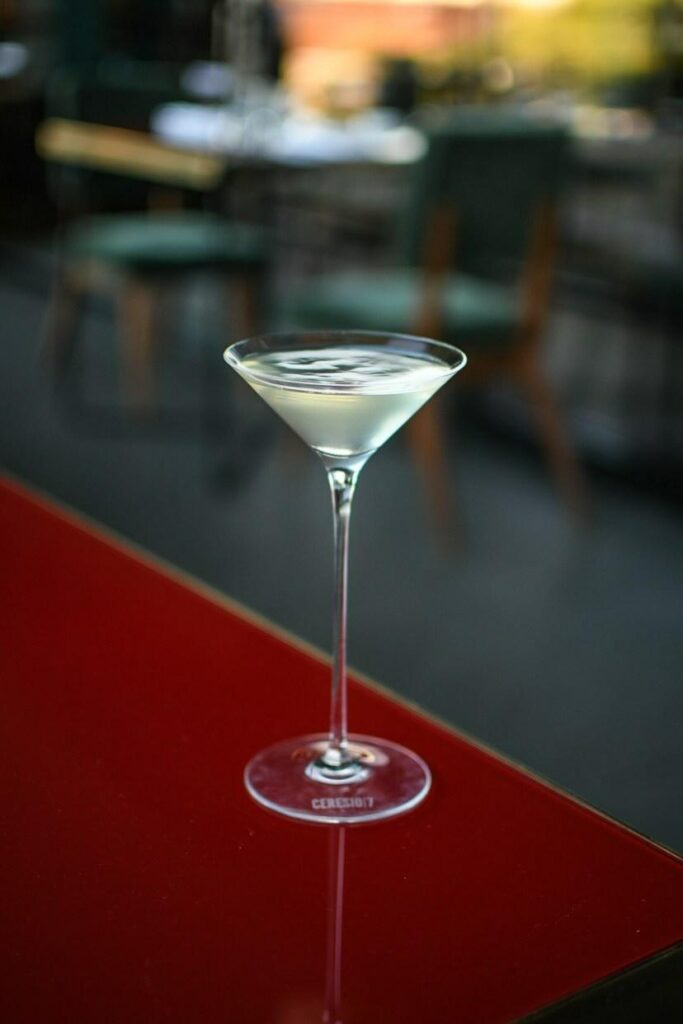
I am the Global Brand Ambassador of O'ndina Gin, for which I am responsible for promoting the product in the Italian, English and, starting this year, Spanish and Greek B2C and B2B markets. Among the cocktails I have created for them, the one that represents me the most is Love in Portofino, with gin, fresh cucumber, lime and lemon juice, elderflower, agave nectar, absinthe flame spray and basil. Another new project, together with Rona Glass, was the design of the new Martini glasses, made of mouth-blown glass, with the Ceresio7 logo and a capacity of 15 cl. In addition to using them to serve our Dry Martini Cocktails, we will also put them on sale in a special box with 4 ready-to-drink cocktails created by us.
Your favorite cocktail?
Dry Martini and Negroni have always been my favorites. They are the ones I appreciate the most, followed by Old Fashioned, Daiquiri and Margarita. Coming from a classical background, I experience the preparation of a Dry Martini as a ritual.[:]